
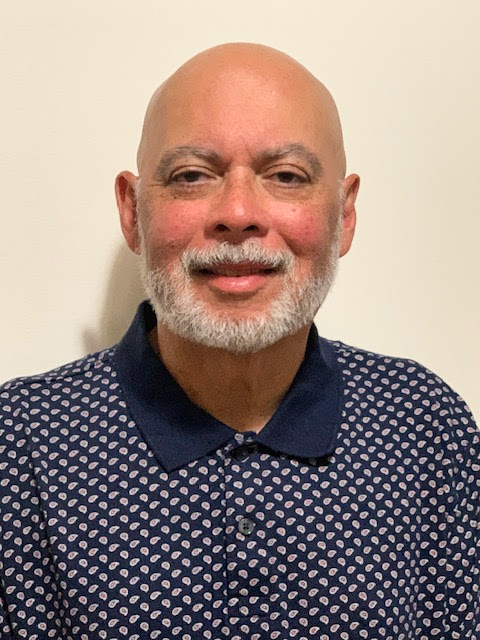
Each month GREENLINE will introduce you to a community member whose work or actions have benefitted the area. This month’s featured neighbor is William Vega, a Brooklyn Community Board 1 member, an activist who has helped to make our neighborhood safer, but let’s let him speak for himself.

Question 1: How would you describe your role in the community?
Answer: Community and environmental activist
Question 2: Where did you grow up?
Answer: “I grew up in Hell’s Kitchen. I was born in New York and raised in Hell’s Kitchen. As a young man, after my father passed away, my family moved to Long Island City. Later I met my wife and she lived in the Lower East Side.”
Question 3: When did you arrive?
Answer: He and his wife made a home in her LES apartment. “My wife had lived in the apartment for over 20 years [when] the building was taken over by ruthless and predatory landlords. After a long legal battle, we took a buyout, and we moved to Williamsburg in 2005. At the time there were several families and friends attending the same elementary school in the East Village. Having friends and a support network was important to us for our son. We wanted him to grow up with a sense of community.
My wife worked in [NYC Department of Education] District 14 as a school social worker. I worked with the [NYC Department of Small Business Services (SBS)] in Lower Manhattan, and our son attended an elementary school in the East Village. North Brooklyn and the L train worked for us. We also found the creative energy of North Brooklyn similar to the East Village.”
Question 4: What do you love most about the neighborhood/area you live in now?
Answer: “I love having neighbors who care about our community and want to be involved in supporting each other. We meet regularly to talk and support each other.”
Question 5: When did you begin to take an active role in the community?
Answer: “Around 2006, we wanted to plant a vegetable garden in our backyard and our neighbors advised us to test the soil for pollutants. I researched our neighborhood and learned of the 100 years of industrial pollution we inherited.”
He grew up with asthma which gave him personal knowledge of the signs and hardships of the condition. He would see, “young mothers trying to calm their child, not knowing their child was having an asthma attack.” He saw seniors also struggling and new cases of asthma increasing in the area.
“I learned about Newton Creek and the oil spill. As I talked with people in the neighborhood and learned about special interest groups who were interested in advocating for clean air I wanted to get more involved. That is when I became an environmental activist.”
Question 6: What are some of the things you have done in this regard?
Answer: He attended community and political meetings, to learn the issues in the neighborhood and find community mentors to learn from.
“I joined political clubs and took leadership roles. I used the skills I learned as a small business advocate in city government to ask the right questions to help businesses.”
He has 42 years of experience that led him to master networking and communications skills that sustain small business.
“These skills helped me to navigate and find solutions for our businesses and now help me to help our community. I became the chair of our 50th Assembly District. I took part in The Sane Energy’s legal action against National Grid’s frack gas pipeline and their operating vapor plant. I became a steward of Cooper Park to protect the little green space we have. I joined [Brooklyn Community Board 1 (BKCB1)] and sit on the Environmental Protection, Transportation, and the Land Use, ULURR & Landmarks committees.”
Question 7: What are your core community causes?
Answer: People.
“During the pandemic, we were challenged in keeping our community safe and connected with each other. I organized neighbors into teams to look after our elderly and young families. We ensured delivery of medicines, food, masks, gloves, and, most importantly, companionship. Our neighbors would look out their windows and see us shoveling snow, cleaning the sidewalk, and making deliveries. They would wave to us with big smiles, knowing they were not alone and we were all in this together. I took it upon myself to pick up discarded syringes in our park and sidewalks. I [have] picked up thousands of syringes, and I properly dispose of them.”
Question 8: What would you say has most changed (for the better and for the worse) about North Brooklyn?
Answer: [For the better] “We are now living in a post pandemic world. I know the biggest change for the better in North Brooklyn is us. We are more caring, stronger, smarter, and organized. When the State Court ordered the [division] of our 50th Assembly District, we environmental leaders gathered to develop a plan of action to protect our assembly district. We testified in front of the independent review commission, our decades of struggles to clean and protect our land, water, and air from oil spills and toxic chemicals. We have two designated Superfund sites [in North Brooklyn]. The proposed court map would have partitioned the northern tip of Greenpoint off into a Queens assembly district. This would weaken our efforts to protect our community. We won and were able to keep our assembly district whole. Assemblywoman Emily Gallagher called us the ‘Fighting 50th’.”
[For the Worse] “Regretfully, what is worse now, is the ever-increasing rents our neighbors have to pay to live here. We are losing good people and families; they can’t afford to live here.”
Question 9: How has North Brooklyn changed you?
Answer: “I found my true self living in North Brooklyn. I found my people. I became a leader and a fighter for our community.”
Question 10: What would you most like to say to new people moving into the community?
Answer: “I would like to shout a big welcome to new neighbors. Educate them on our community’s history and encourage them to participate in community events. We have voted into office great officials in the city, state, and federal government. Our neighbors are extended members of our families. Every day, as neighbors, we make our community a better place to live.”
Question 11: What is something you’d like to see in the neighborhood in 5–10 years?
Answer: I would like to see real affordable housing, safer designed streets, more open streets, and more green spaces.
Question 12: What about this community makes you proud to live here?
Answer: “That we are fighters! We don’t do the talk; we do the walk. We are also caregivers to others, we roll up our sleeves to help those in need and [who] have no voice. We will show love to our new migrant neighbors and support their effort for a better life.”
Question 13: Name one place in North Brooklyn that brings you joy, and why?
Answer: “Cooper Park. Parks are sacred living spaces for everyone to experience. We returned the land where Peter Cooper operated his horse glue factory to the people. It is very rewarding and an honor being a park steward, seeing our neighbors of all ages living the best life possible on our green space.”

 The Greenline