
Before the NYC Rent Guidelines Board (RGB) assembled for a vote, whistles and chants of “Rent Rollback!” from tenants and tenant activists were heard. Once the board assembled, the whistles and chants continued through the rollcall.
Nestor Davidson, chair of the New York City Rent Guidelines Board, welcomed all to the meeting over the continued shouts and whistles. He recognized all those who had attended the previous public meetings and the over 250 submissions of personal testimony. “Tenants across the city shared their struggles to afford their rent and their fear of losing their homes as well as their challenges with housing conditions that no one should have to face. And owners shared their experience trying to maintain their apartments and their livelihoods while facing the reality of increasing operating costs. All of this has been critical of our work.”
In Davidson’s statement that was released at the meeting he outlined the influences that went into the RGB’s decision.
For the tenants’ perspective, he cited the RGB’s 2023 Income and Affordability Study (I&A Study), which highlighted persistent and growing challenges for tenants with the increase in inflation and wage losses. The 2021 Housing and Vacancy Survey (HVS), which reported that the median gross rent for rent-stabilized tenants was 36.2% of household income in 2021, this factored in that the proportion of rent stabilized tenants who are severely rent burdened — paying over 50% of their income on rent — reached an all-time high of nearly 40%.
As for the owner’s struggles, Davidson cited RGB’s 2023 Price Index of Operating Costs Report (PIOC Report), which stated, “prices facing owners rose 8.1% from April 2022 through March 2023, exacerbated by inflation. It is likely that elements of these recent trends, including rising insurance costs and property taxes, will persist in the immediate future even as inflation may abate, with RGB staff projecting that the rise in prices will drop to 3.7% next year.”
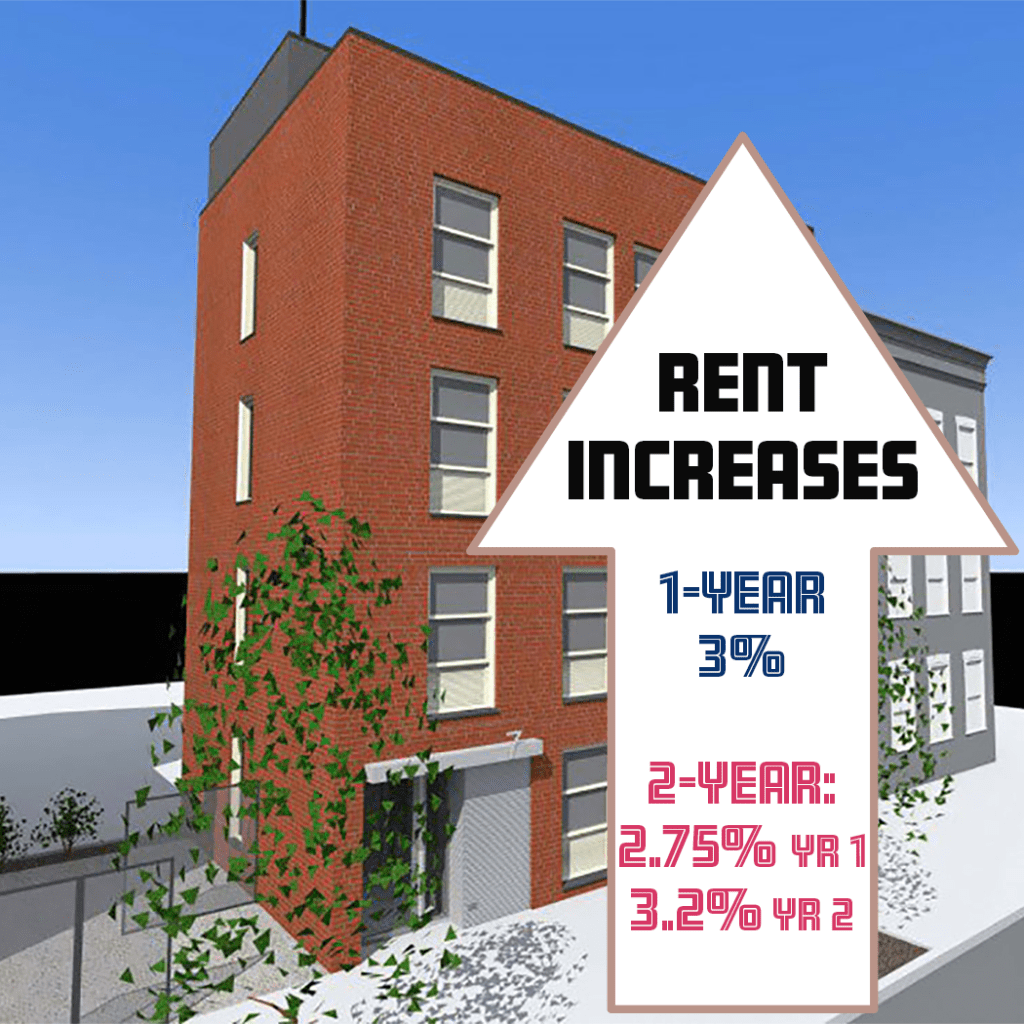
The RGB vote 5 to 4 in favor of a 3% increase for one-year leases and a two-tier increase for two-year leases (2.75% increase for the first year and a 3.2% increase for the second year).
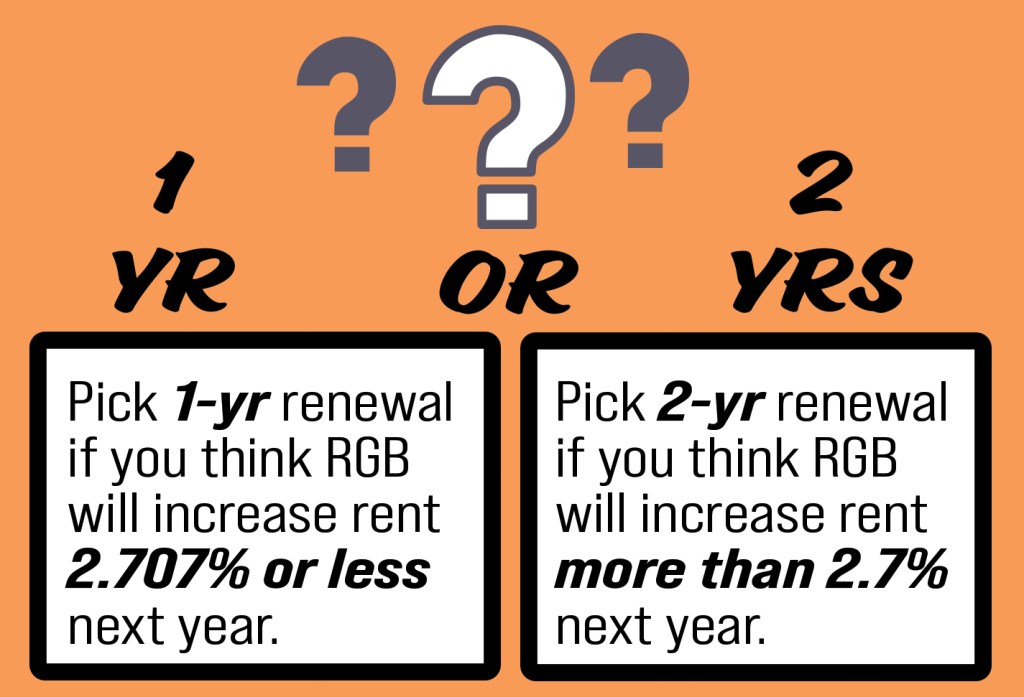
When you do the math, this means that an $1000/month apartment that was renewed for two years would pay $1027.50 Year 1 and 1060.38 Year 2. If this apartment was renewed for one year it would be $1030 for Year 1, and if the RGB agreed to another 3% increase next year the second year’s rent would be $1060.90.
It’s a gamble on how you speculate as to how the RGB will vote next year. You are better off taking a one-year lease if you think next year the RGB will vote for a one-year increase of 2.707% or under; if you feel the RGB will vote next year for a one-year increase of larger than 2.707% (a number that is lower than the previous two increases) then you are better off to renew your lease for two years.
The Rent Guidelines Board consists of nine members, who are all appointed by the mayor. Two members are appointed to represent tenant interests, two members represent owner interests, and five members are appointed to represent the interests of the general public. As NYC Mayor Eric Adams’s term continues through 2025, and if what’s past is prologue, the board may vote in a similar 3% increase vein next year. Although, each year brings challenges and the board would rule according to the side that encountered the harder challenges.
The rent increases go into effect on leases signed/renewed on October 1, 2023–September 30, 2024.

 The Greenline