
National Grid’s rate increase starts September 1
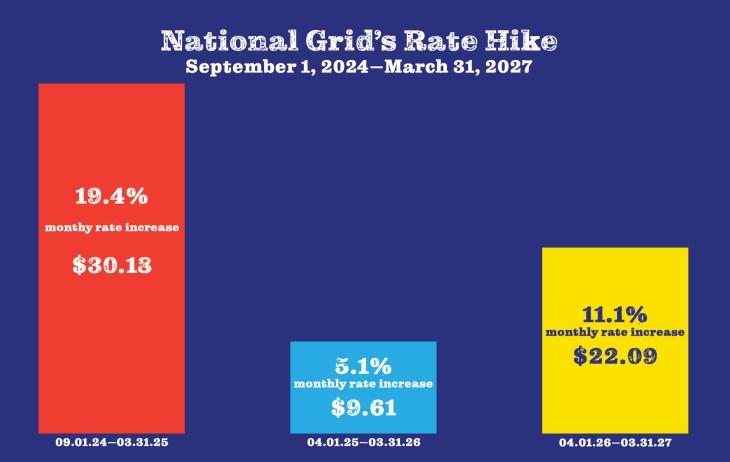
This estimate is based on the average use of 83 therms per month.
On August 15, the New York State Public Service Commission (PSC) unanimously approved the proposal that established new rate hikes for Brooklyn, Staten Island, and parts of Long Island and Queens. The increases will go toward: maintaining and modernizing the operation of the distribution network, programs to promote energy efficiency and reduce emissions, and bill assistance for the most vulnerable customers.
In dollars and cents, the 19.4% rate hike translates to a $30.18 monthly increase for the average user (using 83 therms per month) from September 1, 2024 through March 31, 2025. This increase includes the retroactive cost from April 1, 2024. The rate hike increases 5.1% percent for the period from April 1, 2025 to March 31, 2026, and the average cost added to the monthly bill would be $9.61. Then another steep hike of 11.1% will be applied from April 1, 2026 to March 31, 2027, and the average monthly increase will be $22.09.
When it comes to gas main replacement National Grid has been a regular presence in North Brooklyn. In the past few months they’ve been digging up sidewalks on Metropolitan Avenue and Conselyea Street from Union Avenue to Graham Avenue. Also those on North Henry Street, Vandervoort Avenue, and many others have been torn up to replace the pipes in the community.
Higher bills are not the only concern in the community. The environmental impact of the continued use of fossil fuels has direct impacts on health. The National Grid Depot at 287 Maspeth Avenue holds two LNG vaporizers. Local community activists fought the plan for adding an additional two vaporizers in part because of increasing the negative health impacts they link to this facility.
“Today’s decision by the Public Service Commission to approve billions of dollars for this corporation results in extreme bill increases that affect a majority of NYC and the entirety of Long Island. This is a testament that those who hold the power to protect us from predatory corporations, defying environmental justice, turn on the very people they are entrusted to protect. The financial, health, and safety costs of the climate crisis are not considered in the equation, disregarding the demands of the people,” said Kim Fraczek, director of Sane Energy Project on August 15.
NYS Assembly Member Emily Gallagher sponsored the All Electric Buildings Act that requires most new buildings in New York State to use electric heat and appliances starting in 2026. She said, “Once again we’re being forced to subsidize new fossil gas infrastructure and pad the profits of multinational utilities instead of rapidly transitioning to cleaner, cheaper, healthier renewables,” in an August 19 post on X.
As the rate increases are here for the present and future, the National Grid website provides the following tips on lowering your bills when it comes to heating and hot water: Lower your water heater setting to 120°F to save energy and prevent scalding. Revisit your thermostat settings to make sure they’re changing with the weather and your schedule. When not spending time in certain areas of your home, turn down the heat supply to those rooms to reduce your energy usage.

 The Greenline