
NYC Council vote on Mayor’s housing plan expected on December 5
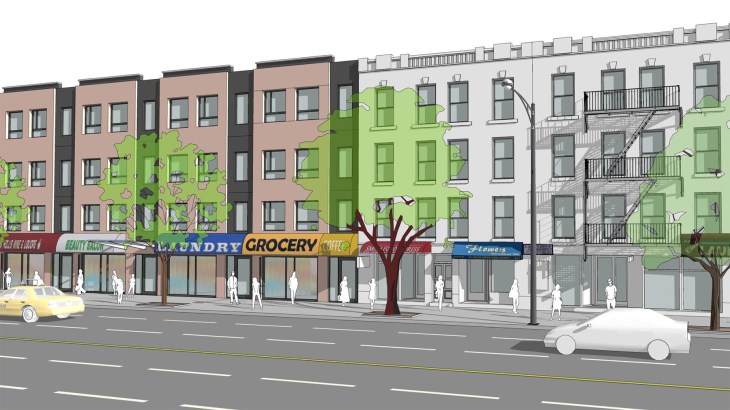
On December 5, the NYC Council voted yes on their amended version of City of Yes.
New York City is in a housing crisis with an apartment vacancy rate of 1.41%: the lowest since 1968, according to data from New York City Department of Housing Preservation and Development (HPD)’s 2023 Housing and Vacancy Survey. In Brooklyn the vacancy rate is 1.27%. The City of Yes for Housing Opportunity was created to amend decades-old zoning laws to “build a little more housing in every neighborhood” with the objective of adding housing without causing dramatic change in any one neighborhood. Williamsburg and Greenpoint neighborhoods have dramatically changed in the past two decades. According to the NYC Department of City Planning, 26,253 new units have been added to these communities within the period from 2010 through 2023.
The basics of this plan adds housing opportunity by changing some zoning rules. In its original form City of Yes would allow “accessory dwelling units: backyard cottages, garage conversions, and basement apartments. It would also permit underused space at campus-type sites (churches, housing developments, etc.) to be converted to housing. Removing off-street parking mandates for new buildings would also allow for more residential space: two parking spaces equals one studio apartment. According to the city, the plan intends to bring affordable housing to high-demand neighborhoods that have priced out working families by creating the Universal Affordability Preference tool that allows buildings to add at least 20% more housing, if the additional homes are affordable to households earning 60% of the Area Median Income (AMI).
I’m grateful that the plan will eliminate parking minimums in one-third of New York City, including all of District 33. This will generate even more housing, more affordability, dynamic ground floor retail uses, and reduce carbon emissions in our transit rich community.
— NYC Council Member Lincoln Restler
However, a statement released by NYC Public Advocate Jumaane Williams on October 24 questions the amount of affordable housing City of Yes will actually create. “While the plan emphasizes affordable housing, it does not guarantee any number of truly affordable units. Currently, this does not require Universal Affordability Preference (UAP) and lacks any regulatory system — it may be adhered to, but I want to make more of it mandatory. This was one of the problems I had with Mandatory Inclusionary Housing — a lot of it wasn’t mandatory, particularly the lower income. Stronger enforcement mechanisms are needed to ensure deep affordability so that developers are not prioritizing building luxury housing. The same applies to residential conversions. How will this proposal guarantee deep affordability?”

The City of Yes for Housing Opportunity plan has been making its way through an approval process since April. In the summer, community boards and borough presidents ruled on the plan. On September 25, the New York City Planning Commission voted their approval. The NYC Council held hearings on City of Yes in mid-October and offered a City for All housing plan, their amended version of City of Yes, on November 1. Feedback from community boards, the public, and council members during this review period has been considered and the priorities that emerged have influenced an amended version of City of Yes.
On November 21 the NYC Council’s Subcommittee on Zoning and Franchises voted 4 to 3 in favor, and then the Land Use Committee voted 8 to 2 in approval of the council’s changes to City of Yes.
NYC Council Member Lincoln Restler said, “Two components that will most impact District 33 are parking mandates and UAP. I’m grateful that the plan will eliminate parking minimums in one-third of New York City, including all of District 33. This will generate even more housing, more affordability, dynamic ground floor retail uses, and reduce carbon emissions in our transit rich community. UAP allows developers to receive a zoning bonus and modestly expand the size of their building if they dedicate that additional space for permanently affordable housing.”
For NYC as a whole, the new version weakens the elimination of the off-street parking mandate to a 3-tier system (parking mandates will remain in districts that have limited or no accessibility to public transit options, others will have modified mandates, and the remainder will have no mandates. It also exempts some low-density contextual districts from City of Yes. Contextual districts have mandates on maximum base heights and maximum building heights — their argument was City of Yes would categorically change their area. Now zoning reforms on “campuses” will ensure that new development is contextual with existing building heights and protects playgrounds and other recreation spaces. This new version proposes it could create 80K units over 15 years; this is a loss of at most 29K units from the original plan that proposed achieving a maximum of 109K new units
Earlier in the day, when the changes to City of Yes were being discussed, Mayor Adams agreed to direct $5B ($4B from the city budget and, with approval from Governor Kathy Hochul, $1B from the state budget) to the council’s City for All version. Adams will distribute $4B as follows: $1B for housing capital; $2B in infrastructure projects that will support investments in sewer and flood infrastructure, street improvements, and open space; and $1B in expense funding over 10 years in tenant protection, voucher assistance and combatting source-of-income discrimination, flood monitoring, and neighborhood planning. Hochul’s New York State commitment will spread $1B to housing capital over the next five years, subject to state budget approval.
The next step brings it back to the City Planning Commission for review. A full council vote is currently expected on December 5.
The NYC Council’s City for All changes, “holistically address New Yorkers’ wide range of housing challenges with policy actions and investments,” stated the press release, and strives to, “deepen affordability of housing production, support affordable homeownership, invest in infrastructure to support growth, strengthen affordable housing preservation, bolster utilization of housing vouchers, protect tenants, and fund housing agency capacity.”
When the community boards voted on the plan only two boards voted “favorable”: Manhattan Community Board 6 (Midtown Manhattan’s East Side) and Brooklyn Community Board 6 (Park Slope, Gowanus, Carroll Gardens, Cobble Hill, Red Hook, and the Columbia St. Waterfront). 28 of the community boards voted “unfavorable”, which covered all of Staten Island, two-thirds of Queens, half of Brooklyn, and half of The Bronx. Sixteen community boards voted favorable with conditions. Brooklyn Community Board 1 (BKCB1) was one of these. Their two conditions were: (1) if basements were converted into dwellings the city would have to conduct extensive studies to assure safety from flooding and toxic intrusion in brownfields, Superfund sites, and other contaminated areas. (2) the community board must have meaningful input in order to assure district’s needs for multi-bedroom apartments are addressed.
Brooklyn, Queens, Manhattan, and The Bronx borough presidents voted “favorable with conditions” and Staten Island’s borough president voted ‘unfavorable. Brooklyn Borough President Antonio Reynoso’s conditions were: permit 5–6 stories in low-density residential areas in the Inner Transit Zone (as opposed to the plan’s 3–5 stories); develop additional zoning designations in the low- to moderate-density category to facilitate more missing middle housing, including courtyard apartments and multiplexes; and lowering the AMI of qualifying units. Reynoso also addressed the plan’s parking provision. His modification would introduce new parking maximums in core transit zones, create a new “flexible parking” designation to allow excess parking to be greater utilized within communities, and unbundle the costs of parking from tenant rent and leases.
After learning of the compromises made on November 21, Reynoso issued this statement, “Mayor Bloomberg contextually zoned already low-density neighborhoods, making it even harder to build new housing, and now, by exempting the same neighborhoods from the City of Yes proposal, Mayor Adams and the city council are choosing to make the same mistakes. The consequences of today’s decision to exempt R1-2A, R2A, and R3A contextual districts from City of Yes are severe: There will be effectively no new housing options for people to live in these communities – which means these neighborhoods remain exclusive and the legacies of segregation and exclusionary zoning live on unfettered. The housing pressure on every other neighborhood will go up – which means if Queens or Staten Island doesn’t grow, Brooklyn is asked to do more than our fair share. City of Yes was never going to fix everything. It was never an affordability strategy, it was never a production plan, and it was never a panacea for our city’s housing crisis. But it was at least a modest opportunity to begin addressing the discriminatory zoning practices that force low-income, Black and Brown neighborhoods to do all of the work of building new housing while low-density neighborhoods get away with contributing nothing. I urge Mayor Adams and the city council to carefully consider the ramifications of these exemptions and be wary not to enhance the harms of administrations past.”
A main concern from many of the critics of the City of Yes Housing Opportunity plan is prioritizing, maintaining, and maximizing truly affordable housing. The Association for Neighborhood and Housing Development (ANHD) stated that the plan, “must take an affordable housing-first approach that seeks to increase not just housing production in general, but specifically rent-regulated affordable housing production, at a higher percentage of total development than today, across all neighborhoods in the city. This is where the greatest housing need in our city lies. Lower-income households experience rent burdens and evictions at disproportionate rates, while the vacancy rate for apartments renting for under $1,100 is functionally zero. We must ensure that changes to our residential zoning regulations are focused on serving this vital need for affordable housing and do not help tip the market in certain neighborhoods away from the production of mission-driven, 100% affordable developments, thereby decreasing the percentage of affordable development overall. This is especially important in low-income, BIPOC neighborhoods, with high displacement risk.”
One of the compromises in the modified City of Yes approved on November 21, does increase affordability access for renters with lower-incomes. It will continue to allow developers to build at least 20% more apartments in medium- and high-density areas, but the additional units must be affordable to households that earn 40% of the area median income (AMI) instead of the 60% AMI in the original.
Rent and wage data for 2023 shows rents grew more than seven times faster than wages throughout New York City. That gap between rent growth (8.6%) and wage growth (1.2%) in New York City was larger than in any of the 50 biggest U.S. metro areas. “New York City is heading in the opposite direction,” said StreetEasy Senior Economist Kenny Lee. “Despite a strong job market in the city, and in some ways because of it, the gap between what a typical renter can afford and the price of rentals on the market is growing. New multifamily buildings coming online has eased competitive pressure in many markets, but in New York City, construction just simply can’t keep up with demand.”
“New York City faces a dire housing shortage which City of Yes seeks to solve,” said NYC Council Member Chi Ossé. “The Council’s response insists upon more thorough investments in affordability and access to ensure that large-scale changes to city housing policy are to the benefit of all.”

 The Greenline