
Reading this may bring on a little déjà vu. The October 2021 issue of GREENLINE covered the beginning stages of planning what shape the new Grand Street Bridge would take.
Then at the end of this past April, the NYC Department of Transportation (NYC DOT) Division of Bridges held two public information meetings in each of the community board districts that surround the bridge: Community Board 5 in Queens and Community Board 1 in Brooklyn at Swinging Sixites Older Adult Center (211 Ainslie).
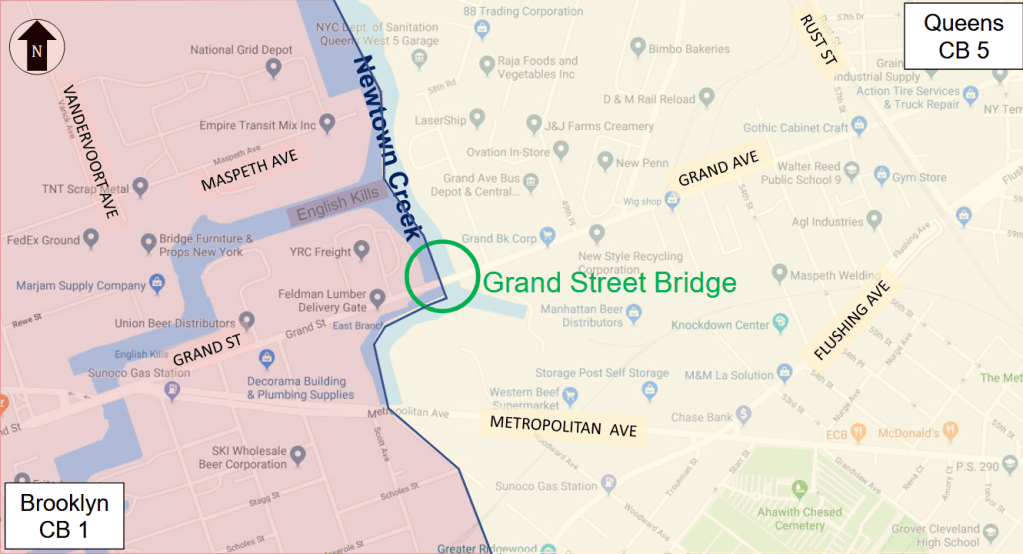
The Grand Street Bridge is a swing bridge over Newtown Creek, connecting Maspeth, Queens with Williamsburg, Brooklyn. The first two bridges over Newtown Creek were built in 1875 and 1890. The current bridge—the third on this site—was opened in 1903.
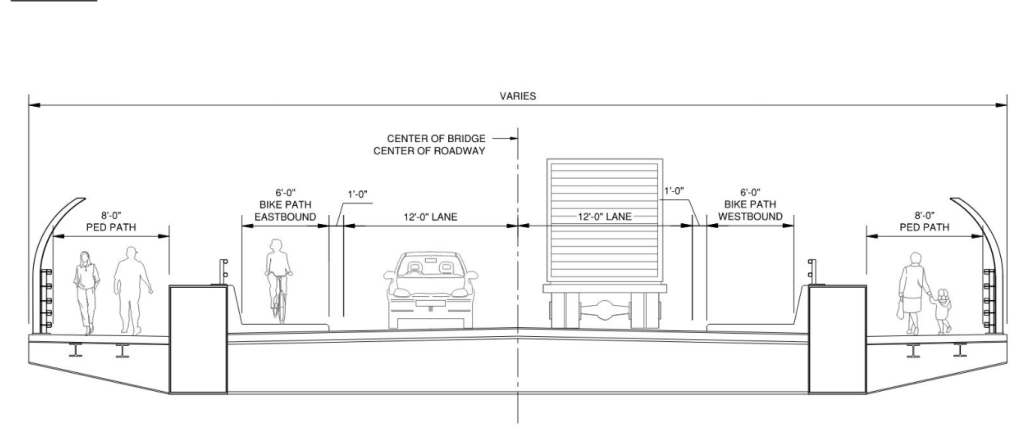
This bridge is a veteran that has been damaged by severe weather on many occasions. It doesn’t meet current structural or geometric design standards, and is too narrow to accommodate current traffic. The NYC DOT is determined to build a new bridge that fits the needs of the community and considers present and future modes of travel.
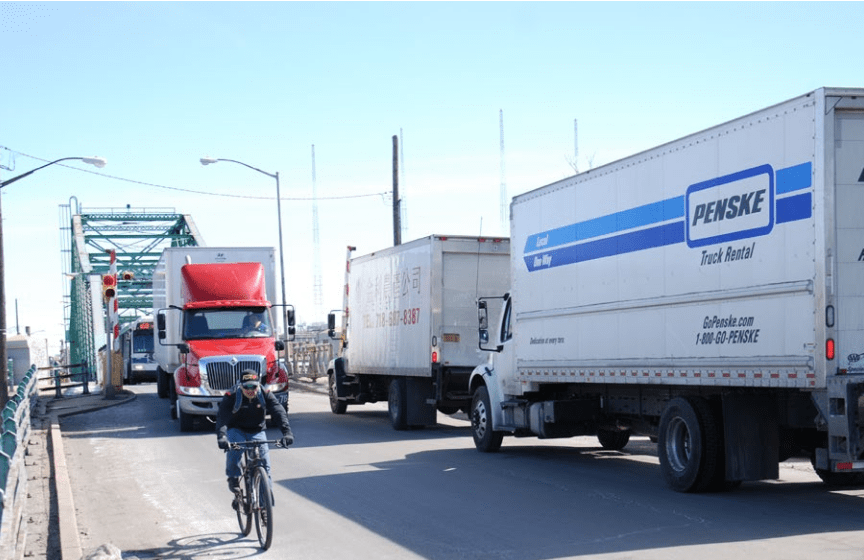
The current state of the bridge is traversed by two-way vehicular traffic, often trucks and busses. There is a narrow space bordered by the truss and the edge rail, not the safest clearance for cyclists or pedestrians.
In addition, this bridge endured more than thirty closures for urgent repairs since January 6 up until this writing.
The presenters at the April 30 meeting at 211 Ainslie Street, described their process. They consider all options – even doing nothing. They agreed this isn’t an option for the Grand Street Bridge, but they have to show that it was thoughtfully addressed.
This process has offered that building a new bridge is the best option. The best bridge types to build for listed purposes and objectives are moveable bridges and either the short span vertical lift or long span vertical lift.
Once foundation constructability, operational reliability and ease of movable span maintenance, traffic control at bridge approaches, right of way requirements, and dredging needs impacts were considered the short span vertical lift type was a clear winner.
Also discussed was how traffic will be handled when the new bridge is under construction. There were several options to consider for this also. It was determined a temporary bridge would work better than a moveable bridge. Temporary bridges are somewhat prefabricated and then tailored to the location and most likely would take a few months to build and place. The next decision is where to position the temporary bridge.
In the scope of this project’s timeline, to quote The Carpenters, “we have only just begun.”
The anticipated schedule for the Grand Street Bridge project show the next step is an environmental review process to take place the second half of 2025. Then Uniform Land Use Review Procedure (ULURP) in 2026. Final design and permitting overlaps ULURP in 2026 and extends through 2027. Construction is expected to begin in 2029 and if so a new Grand Street Bridge may open in 2033.

 The Greenline