
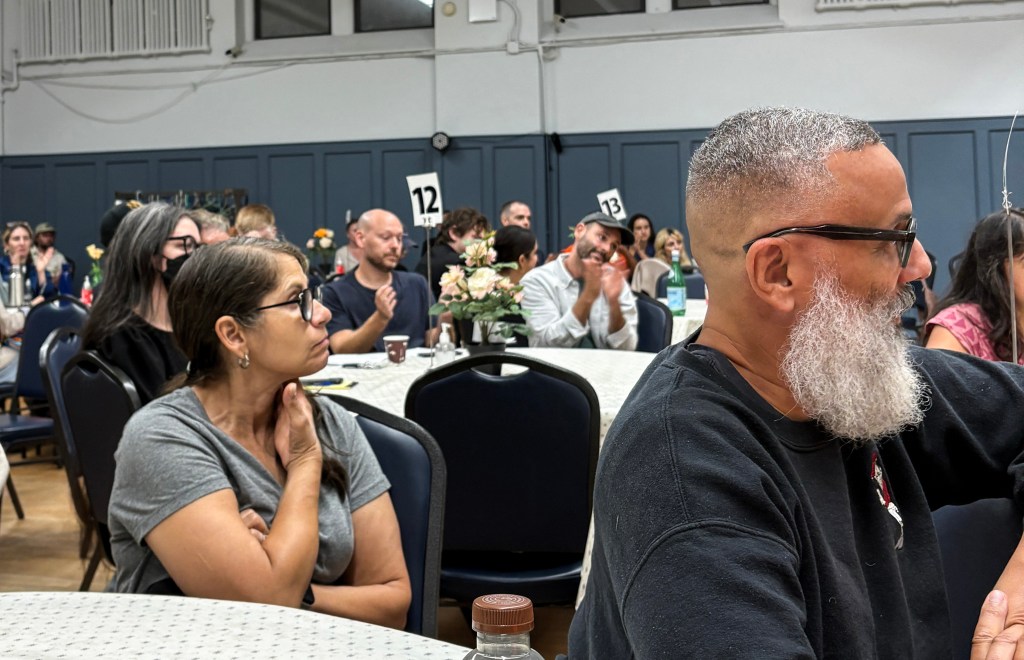
Frustrated voices of residents echoed through the town hall as they faced their adversary: Green Asphalt, a plant that “produces approximately 100,000 tons of 100% recycled asphalt per year,” according to their website.
On the night of September 16, the Polish Slavic Center was packed with concerned Greenpoint and Blissville (Sunnyside, Queens) residents. Those who spoke up during the meeting expressed outrage over operations at the asphalt plant in Long Island City. Residents described the plant’s actions as “disgusting”, “a public health issue,” and how they “needed to be shut down.”

During the meeting, residents and elected officials urged the plant to respond more seriously to their concerns. The foul odor that residents continually endure daily started in 2012, a year after Green Asphalt began its operations. “Anyone who walks or drives or bikes over the bridge can easily see that this is coming from your facility,” NYS Assembly Member Emily Gallagher said during the meeting.
Residents in the room were visibly tired and worn. Thomas Miticas was among them, voicing his outrage throughout the meeting. Miticas, 60, resides in Blissivlle— one of the areas that is profoundly impacted by the plant’s operations. He spoke directly to the two representatives from Green Asphalt, “Every time we go outside, our eyes tear, our mouths taste of your plant, and our lungs hurt. We know where it’s coming from. Last summer, I had to move my great aunt out of the neighborhood, 95 years old, born in the house we live in, because she couldn’t breathe.”
Green Asphalt acknowledged the difficult conditions residents are experiencing. Plant owner Michael Capasso assured community members that the facility is complying with DEC requirements and testing regulations. The company stated that they are aware of the complaints and are working to address concerns as they have become more frequent and vocal.
Both community members and elected officials in attendance urged the New York State Department of Environmental Conservation (DEC) and Green Asphalt to operate under the conditions that smokestacks will be doubled in height, and they will work together to provide proper air quality reports for public access.
Dan Wiley, representing U.S. Representative Nydia Veláquez’s office, informed the town hall that their office received a commitment last year from Green Asphalt officials that the smokestack would be doubled from 45 to 90 feet. “They were going to redirect it away from our residential community and get the quality testing to ensure the safety of our neighborhood and have this issue resolved once and for all, ” Wiley said.
By raising the smokestacks to 90 feet, the contaminants are released higher into the air. The DEC agreed that “increasing the stack height at the facility will help improve the air quality at the facility,” in a letter from DEC’s attorney to Green Asphalt’s attorney dated June 11, 2025
As of Tuesday, Green Asphalt is facing a $124,000 fine from DEC and has orders to double its smokestack no later than December 11.
NYS Senator Kristen Gonzalez confirmed during the meeting that the violations committed by the Green Asphalt plant following their failure to comply with Senate Bill S6599, the Climate Leadership and Community Protection Act. This law was enacted in 2019, and has a provision that clearly states that a company, like Green Asphalt, is required to submit an air quality monitoring report. “Right now, you are a year late with that report,” Gonzalez said during the meeting.
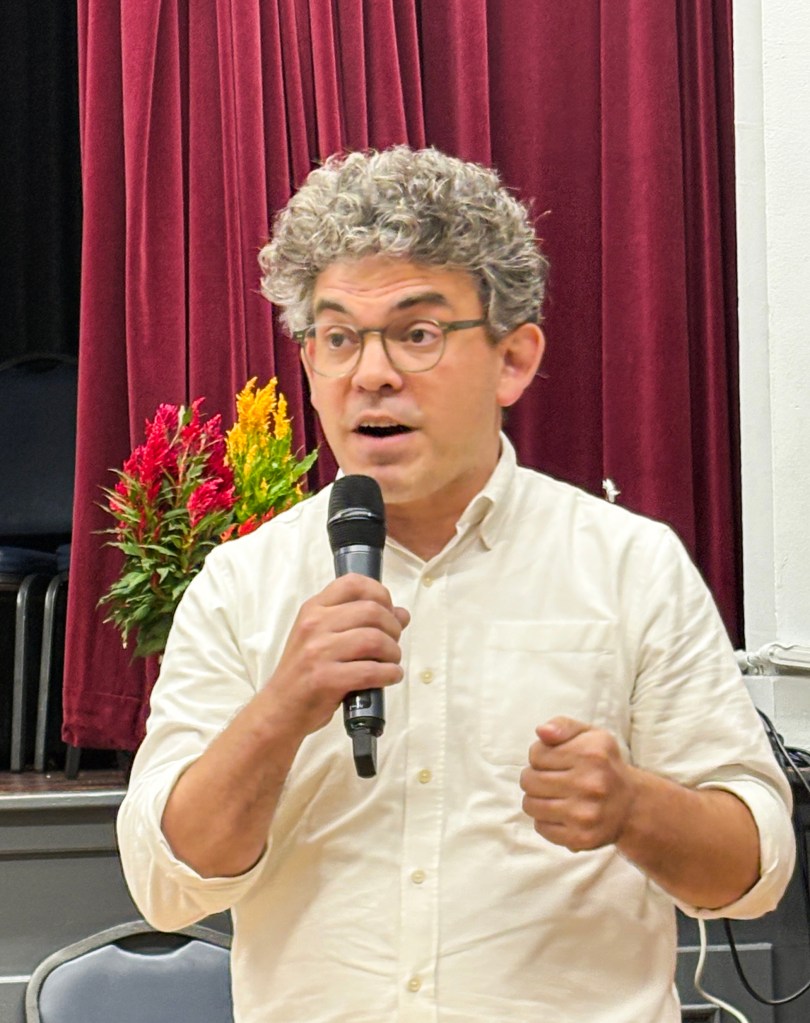
NYC Council Member Lincoln Restler challenged Green Asphalt, asking why the work had never been completed. “Could you explain to us again why that work never occurred, that you were waiting on DEC to direct you to do work that was fully within your control, that you could have done at any time over the last thirteen years you’ve been polluting our community,” Restler asked.
At the conclusion of the meeting, Restler promised community members that he would contact the Department of Transportation to request that they reconsider their contract with Green Asphalt.
Officials and residents stated that a possible solution would be the financial ramifications that the company could face if it does not modify its operations.
 The Greenline