
Child care workers are the foundation of child care. As the city strives to become more family friendly and offer more affordable child care options, a constant in both is the growing need for more child care workers.
However, many child care workers are not paid a living wage.
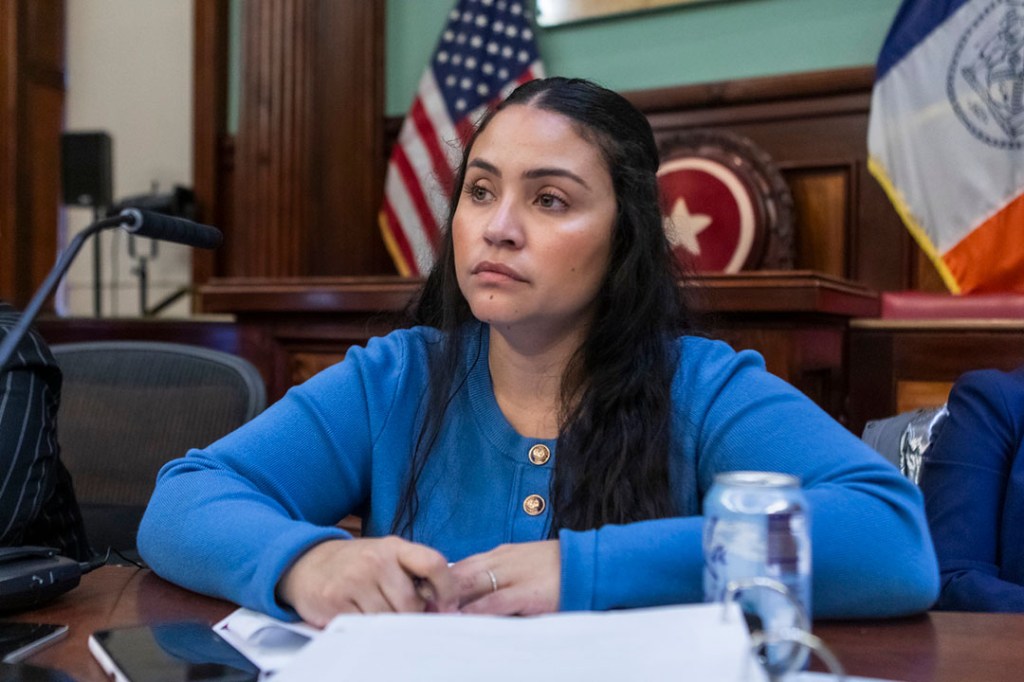
NYC Council Member Jennifer Gutiérrez chairs the NYC Council Subcommittee on Early Childhood Education (ECE Subcommittee). Universal Childcare has been a priority for Gutiérrez since she became a council member. In March 2023, she introduced a bill (Int 0941-2023) to establish an office of child care to oversee free child care for all city residents.
The first meeting of the ECE Subcommittee was held on March 2, at which Gutiérrez stated, “How can we make sure that people who care for our babies, who are raising our children, who we trust, are paid a living wage?”
If early childhood educators remain in the bottom 4% of wage earners in NYS, this career pathway is not a viable career pathway for most people.
Debra Sue Lorenzen, director of Youth and Education for St. Nicks Alliance
During this meeting it was revealed that there is currently one licensed child care seat for every two children under five-years old. That “2-Care” will quickly expand and launch this fall, serving approximately 2,000 two-year olds with plans to expand to roughly 12,000 next school year. That 3K is currently serving about 2,855 children with a goal of expanding to roughly 4,700.
Simple math will prod most to ask: will there be enough staff to cover this fast and vast increase?
The ECE Subcommittee held their second meeting on April 15. In an effort to address the need for more child care staff, Gutiérrez announced she introduced legislation, Int 0820-2026 , more familiarly called: Supporting Early Educator Development (SEED) Act. This legislation would provide financial assistance and job placement support for New Yorkers entering the child care field. Participants would be required to commit to work in New York City for at least five years, which would help to stabilize the Early Childhood Education workforce in the city.
Many don’t know that child care staff working in community and home-based facilities do not have a union contract with generous benefits and a salary scale that incentivizes obtaining additional education and experience. They are paid much less than their NYC Public Schools counterparts.
During the April 15 meeting, Debra Sue Lorenzen, director of Youth and Education for St. Nicks Alliance, testified, “Fair pay is the foundation upon which the ECE workforce pipeline must be built. If early childhood educators remain in the bottom 4% of wage earners in NYS, this career pathway is not a viable career pathway for most people.” St. Nicks Alliance manages Small World Early Childhood Center (211 Ainslie Street).
“For community-based providers, the most significant barrier to hiring and retaining early childhood staff is inadequate pay, a direct result of suppressed contract values set by the New York City Department of Education (DOE) and the shamefully low collective bargaining agreements for DC37 Local 95, DC37 Local 205 and Council of School Supervisors and Administrators. As a result, center-based providers face staff shortages, preventing them from running at full capacity due to Article 47 child-to-adult ratios. This year Small World was forced to close three classrooms–a third of our capacity–due to inadequate staffing. These closures occurred despite receiving up to four applications for DOE-contracted 3K and UPK seats,” added Lorenzen.
A publication from The New School, released on January 28, 2026 directly addresses the need for change. It states, “[O]ne thing that cannot wait: ensuring adequate compensation for now woefully underpaid child care programs and workers. Such a commitment is missing from the governor’s executive budget. It’s an omission the state legislature must speedily correct.” The piece was authored by Lauren Melodia, director of economic and fiscal policy at the Center for New York City Affairs at The New School and Ludovica Tursini, PhD candidate in the economics department at The New School for Social Research.
The article puts forth three steps: establishing a clearly defined and sector-wide salary scale and career ladder, the true cost of care must be factored in when subsidizing early care and education, and the legislature must enact an early care and education wage subsidy fund.
The first step will entice more workers as “low starting pay discourages prospective workers, who can earn comparable wages in retail or fast food jobs that don’t require lengthy background checks or upfront, unpaid training.”
The second addresses that child care directors and providers discount private rates because they know parents cannot afford the true cost of care. The State Office of Children and Family Services periodically surveys the local market for private child care services, determines what providers are charging, and sets public reimbursement rates accordingly.
“A public rating setting built on this market failure leads to programs having inadequate funding to keep their businesses open and pay their staff,” The New School.
Step three is necessary according to The New School because, “Without a wage subsidy fund, providers continuing to serve a mix of clients will face several options – all bad. They can improve salaries by increasing tuition for already financially hard-pressed private pay families. Or they can shrink their programs to only serve public clients, which will make child care less available to parents not yet eligible for phased-in new public programs. This is a particular concern for families needing infant care now, which is not included in Mayor Mamdani’s approach to “age down the system.” Or they can maintain their existing private tuition rates – but then they won’t be able to adequately pay their staff according to a sector-wide salary scale.”
Some headway has been made toward fairer pay in the state legislature. NYS Senate Bill S5533 was introduced on February 24, 2025. This bill “establishes the permanent child care workforce pay equity fund and provides for the distribution thereof.” It is sponsored by NYS Senator Jabari Brisport and NYS Senator Kristen Gonzalez is one of four co-sponsors. Currently it’s stuck in “in committee” status with the NYS Senate.
The Day Care Council of New York (DCCNY) published a report in December 2025 which offered recommendations to build a stronger child care workforce. DCCNY is a diverse membership organization of over 120 non-profit and for-profit providers that operate more than 250 publicly-funded child care centers and family child care programs throughout New York City. They were established over 75 years ago. The report was authored by Emmy Liss, an independent policy consultant and researcher at the time of publication. In January, Liss became the newly appointed executive director of the Mayor’s Office of Child Care.
DCCNY’s report informs that, “Child care workers earn less than 96% of all other occupations in NYC.” It also states, “The physically demanding nature of the job, long hours, lack of paid leave, and widespread perception of their work as “babysitting” contribute to high stress and dissatisfaction among educators. Frequent staff turnover and understaffing often leave remaining educators carrying disproportionate workloads, compounding burnout.”
A career that has few incentives to draw potential employees and that has high staff turnover, doesn’t seem to have the ability to sustain the upcoming need to more than double its workforce. The City estimates roughly 70,000 early childhood educators are needed citywide beginning this fall while currently there are only 32,900.
DCCNY’s report offers ways to increase the workforce first of all being increasing pay. Building a pipeline of future educators could be done by exposing high school students to training, student loan forgiveness, create opportunities for parents to become educators, among other things. Providing more support to workers so they remain in the field is one of the other recommendations.
On April 16, Mayor Zohran Kwame Mamdani announced seven new early childhood education centers would open in the fall. Utilizing previously vacant sites will add about 240 new 3-K seats across three boroughs: one in the Bronx, two in Brooklyn, four in Queens.
“Today, we are opening doors that should never have been closed to our families — safe, nurturing spaces where their children can learn and grow, in their own communities,” said Mamdani. “By bringing these sites online, we’re making clear that no amount of red tape will get in the way of delivering the free, universal child care New Yorkers deserve.”
The ECE Subcommittee held its third meeting on April 22. Holding three subcommittee meetings within two months shows Gutiérrez’s commitment to finding solutions that expand the childcare workforce, which match the city’s expansion in child care.


